

Are you trying to decide between Xero and Sage for your business? Choosing the right accounting software can feel overwhelming, but it doesn’t have to be.
Imagine having a tool that simplifies your finances, saves you time, and reduces stress. That’s the power of choosing the right software. We’ll explore the key differences between Xero and Sage, helping you determine which one aligns best with your business needs.
Whether you’re looking for user-friendliness, robust features, or affordability, we’ve got you covered. Stick with us, and by the end, you’ll have all the information you need to make a confident decision. Ready to find out which platform could be your ideal business partner? Let’s dive in!
Feature Comparison
When choosing between Xero and Sage for your accounting needs, understanding the features each offers can guide you to the right decision. Let’s dive into a feature comparison that highlights the strengths and weaknesses of both. Whether you’re a small business owner or an accountant, knowing which software can make your life easier is crucial.
Interface And Usability
Imagine logging into your accounting software and feeling overwhelmed by the cluttered interface. Xero provides a clean, intuitive interface that simplifies your navigation experience. Sage, on the other hand, might seem a bit more complex but offers a robust set of tools once you master its layout. Have you found yourself struggling with too many clicks to perform a simple task? If yes, you might appreciate Xero’s streamlined approach.
Accounting Features
Both platforms offer essential accounting features, but the depth and accessibility of these features can vary. Xero shines with automatic bank feeds and easy reconciliation. Sage provides comprehensive tax management and advanced reporting. Are you looking for a software that offers extensive financial analysis tools? Then Sage might be your go-to choice. Conversely, if simplicity in daily transactions is what you crave, Xero might meet your needs.
Integration Options
How well does your accounting software play with others? Xero boasts a wide range of third-party integrations, from CRM tools to e-commerce platforms. Sage also offers integrations but is slightly more limited. Do you rely on multiple software solutions to run your business efficiently? If integration is key, Xero might offer the flexibility you need. Sage, however, excels in seamless integration within its own suite of products.
Mobile Accessibility
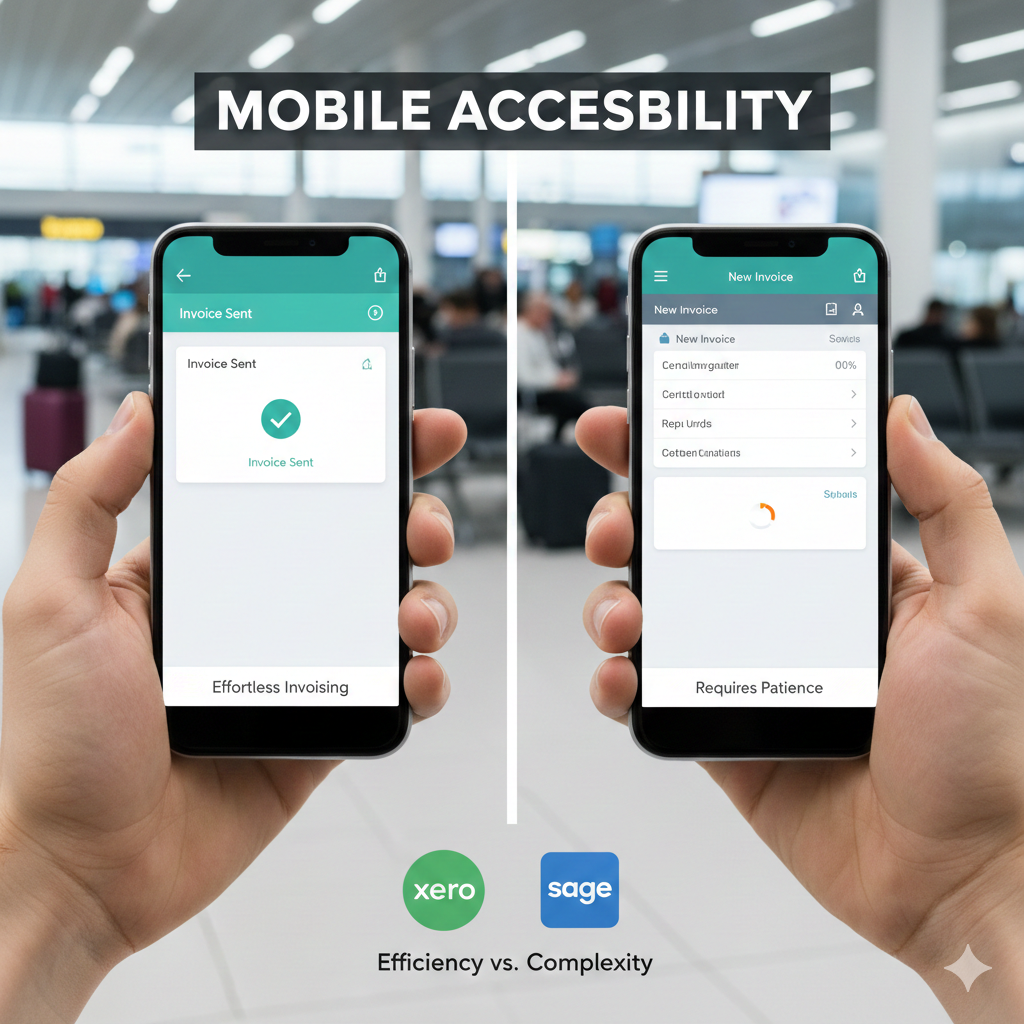
In today’s fast-paced world, having access to your accounts on the go is vital. Xero’s mobile app offers a user-friendly experience with features like expense tracking and invoice creation. Sage provides mobile access too, but it may require a bit more patience to navigate. Have you ever needed to send an invoice while traveling? With Xero, you can do it effortlessly from your smartphone, whereas Sage might require a few extra taps.
Choosing between Xero and Sage ultimately depends on your specific needs and preferences. Consider which features will make your day-to-day operations smoother and more efficient. What matters most to you in an accounting software? The answer to that question might just guide you to the perfect match.
Pricing And Plans
When choosing between Xero and Sage, understanding their pricing and plans can be crucial for making an informed decision. Whether you are a small business owner or managing a growing company, finding a plan that aligns with your budget and needs is essential. Let’s break down the subscription models and cost-effectiveness of these two popular accounting software options.
Subscription Models
Xero offers a straightforward pricing model with three main tiers: Starter, Standard, and Premium. Each plan provides a set of features designed to cater to different business sizes and needs. For instance, the Starter plan is ideal for freelancers and small businesses, while the Premium plan suits larger companies with more complex accounting requirements.
Sage, on the other hand, provides a more flexible subscription model with multiple options based on the specific software suite you choose. Sage Business Cloud Accounting, for example, has two main plans: Sage Accounting Start and Sage Accounting. This flexibility allows you to select a plan that fits your business model, but can also make it slightly more complex to navigate.
Cost Effectiveness
When evaluating cost-effectiveness, it’s important to consider the value each plan brings to your business. Xero’s plans are competitively priced, with the Starter plan often being a favorite among small businesses for its affordability and essential features. However, as your business grows, upgrading to the Premium plan might become necessary, potentially increasing your expenses.
Sage’s pricing can be slightly higher, especially when considering additional features or modules. Yet, many users find it worthwhile due to its extensive functionality and customizable options. For businesses that require more tailored solutions, Sage can prove cost-effective in the long run.
Have you considered which features are most critical for your business’s success? It’s vital to weigh the costs against the benefits and decide which software aligns best with your financial goals.
Both Xero and Sage have their strengths and can cater to various business needs. The key is to identify what is most important for you and your business in terms of functionality and budget. Which plan resonates most with your requirements?
Customer Support
Customer support plays a vital role in choosing accounting software. Users need reliable help to solve issues quickly. Xero and Sage offer different support options. This section explores their availability and channels.
Availability
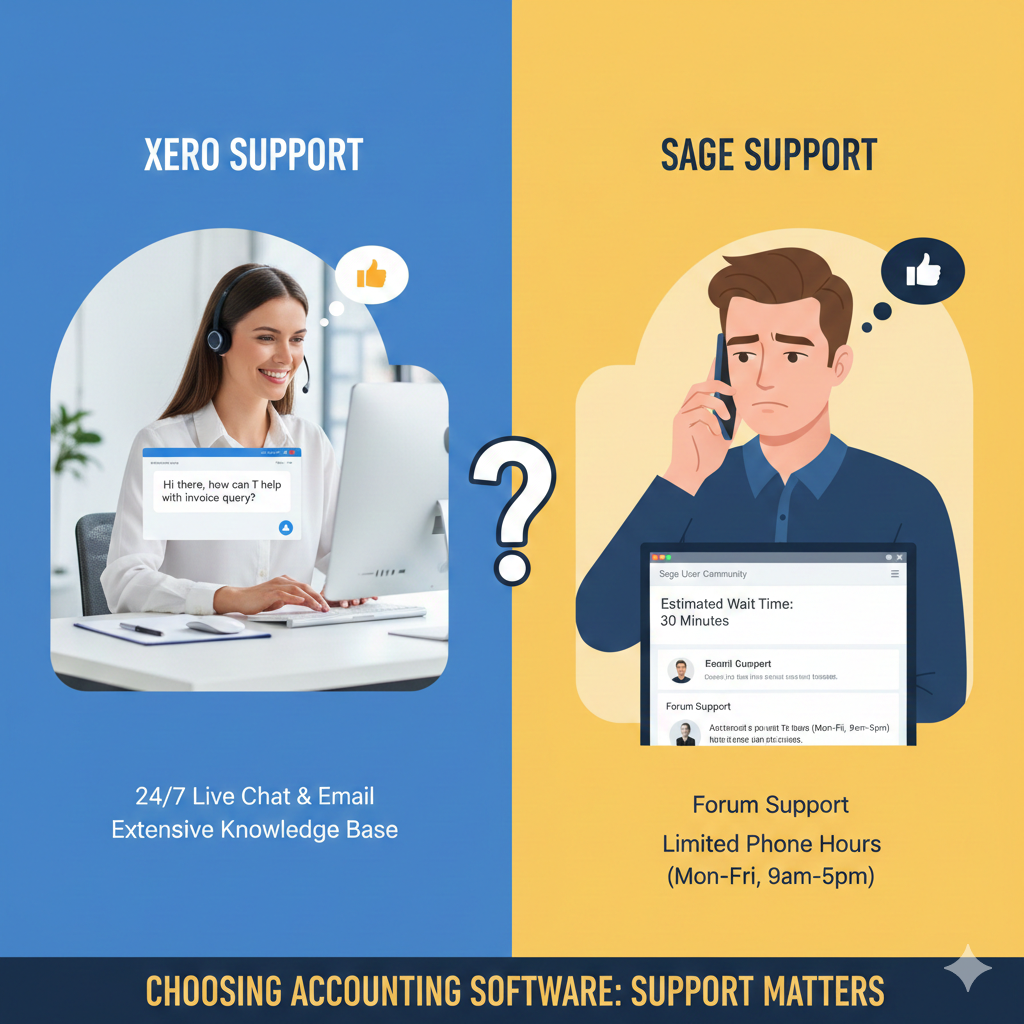
Xero provides 24/7 support for its users. This means help is always available. Sage also offers customer support, but with limited hours. Typically, Sage support is available during business hours. This can affect users in different time zones.
Support Channels
Xero offers support through email and live chat. These options cater to different user preferences. Email support allows detailed queries. Live chat provides real-time assistance.
Sage supports users through phone and email. Phone support is ideal for complex issues. It allows direct interaction with support staff. Email offers a written record of solutions.
Both platforms have comprehensive online resources. Users can access guides and FAQs. These self-help resources enhance user experience.
User Reviews
Users find Xero’s interface intuitive and easy to navigate, making it suitable for small businesses. Sage offers robust features for larger enterprises, but some find its interface complex. User reviews highlight Xero’s customer service as responsive, while Sage is praised for its detailed accounting capabilities.
When choosing the right accounting software for your business, user reviews can be a goldmine of information. They offer genuine insights into what you might experience with Xero or Sage. While expert opinions are valuable, hearing from fellow users can provide a more grounded understanding. Let’s explore what users are saying about these platforms.
Positive Feedback
Many users praise Xero for its intuitive interface. You don’t need to be a tech whiz to navigate it. Small businesses often appreciate its simplicity and efficiency in managing invoices and expenses. Sage, on the other hand, receives high marks for its robust features. Users with more complex accounting needs find its tools comprehensive.
It’s particularly popular among larger businesses due to its depth and flexibility. A friend mentioned how Xero’s mobile app allowed her to send invoices on the go. Such convenience can be a game-changer for busy entrepreneurs like you.
Common Complaints
Despite its user-friendly nature, some users find Xero’s reporting tools lacking. If detailed analytics is your priority, you might need to explore add-ons. It can be frustrating when the default tools don’t meet your needs. Sage, despite its powerful features, is often criticized for being less intuitive. Users have noted a steeper learning curve, which can be daunting.
If you’re not ready to invest time in training, this could be a hurdle. A colleague shared his struggle with Sage’s customer support, noting slow response times. How important is timely help for your business operations? User reviews highlight real-world experiences. What would your priorities be when choosing between Xero and Sage?

Business Suitability
Xero offers intuitive online accounting, perfect for small businesses seeking ease of use. Sage provides comprehensive solutions, suitable for larger enterprises needing advanced features and scalability. Both platforms excel in financial management, catering to diverse business needs efficiently.
When choosing accounting software, understanding which platform best suits your business needs is essential. Xero and Sage offer distinct features tailored to various business types. Whether you’re a small business owner or managing a large enterprise, selecting the right tool can streamline operations and enhance productivity. Let’s dive into how Xero and Sage align with different business requirements.
Small Business Needs
Small businesses thrive on simplicity and efficiency. Xero is often praised for its user-friendly interface, making it ideal for small business owners who may not have extensive accounting knowledge. It offers features like easy invoicing, bank reconciliation, and a mobile app that allows you to manage finances on the go. Sage, on the other hand, provides robust solutions but can seem overwhelming for startups or small businesses.
Its strength lies in its comprehensive reporting capabilities, which may be more than what a small business needs. However, if you plan to scale, Sage offers a pathway to more advanced features as your business grows. Have you ever wondered how much time you spend on accounting tasks? Xero’s streamlined features can significantly reduce this time, allowing you to focus on growing your business. But if you’re aiming for detailed financial insights from the get-go, Sage might be worth the steeper learning curve.
Enterprise Solutions
Enterprises require advanced features that support complex operations. Sage is a strong contender in this arena with its customizable modules that cater to various industries. It offers extensive features like inventory management, project costing, and multi-currency transactions, making it suitable for large organizations with diverse needs. Xero, while excellent for small to mid-sized businesses, may fall short in meeting the intricate demands of larger enterprises. However,
it offers integrations with many third-party applications, which can extend its functionality. This makes it a flexible option if you’re willing to invest in additional tools. Consider your enterprise’s specific needs. Do you require a highly customizable system with deep analytics? Sage might be your go-to. On the other hand, if you value flexibility and integration with other software, Xero’s ecosystem could be more beneficial. Ultimately, the choice between Xero and Sage hinges on your business size, growth plans, and specific accounting needs. Take the time to evaluate what features will drive your business forward.

Security Measures
Security is a crucial factor when choosing accounting software. Both Xero and Sage prioritize keeping your data safe. They implement robust security measures. Let’s explore how they protect your information.
Data Protection
Xero uses advanced encryption to secure your data. It ensures your information stays private. Regular backups help prevent data loss. Sage also employs strong encryption techniques. It keeps your data safe from unauthorized access. Both platforms offer two-factor authentication. This adds an extra layer of security for users.
Compliance Standards
Xero adheres to international compliance standards. It meets GDPR requirements for data protection. Sage follows industry regulations to safeguard your information. Both companies regularly update their security protocols. This helps them stay ahead of potential threats. They invest in security audits to ensure compliance. These audits help maintain trust with users.
Market Presence
In the world of accounting software, market presence matters. It shows how widely a tool is used and trusted. Xero and Sage are two leaders in this space. Both have strong market presence. This section explores their global reach and industry adoption.
Global Reach
Xero has expanded rapidly. It serves customers in over 180 countries. Its user-friendly interface attracts small businesses worldwide. Sage has a long history. It operates in about 23 countries. Sage is known for its robust features. It targets both small and large enterprises. Both companies aim to grow their global footprint.
Industry Adoption
Xero is popular among startups. It offers affordable pricing. Many tech firms choose Xero. It integrates well with other tools. Sage is preferred by established businesses. It provides comprehensive solutions. Many accounting firms rely on Sage. Both tools are widely adopted across industries.
Conclusion
Choosing between Xero and Sage depends on your business needs. Xero offers user-friendly features that simplify accounting tasks. Sage provides robust tools for complex financial management. Both platforms support efficient bookkeeping. Consider your budget and required functionalities. Small businesses often prefer Xero for its simplicity.
Larger enterprises might lean towards Sage for advanced capabilities. Evaluate the integrations each offers with other tools. Customer support is essential, too. Test both platforms to see which suits your workflow best. Ultimately, select the software that aligns with your goals.